
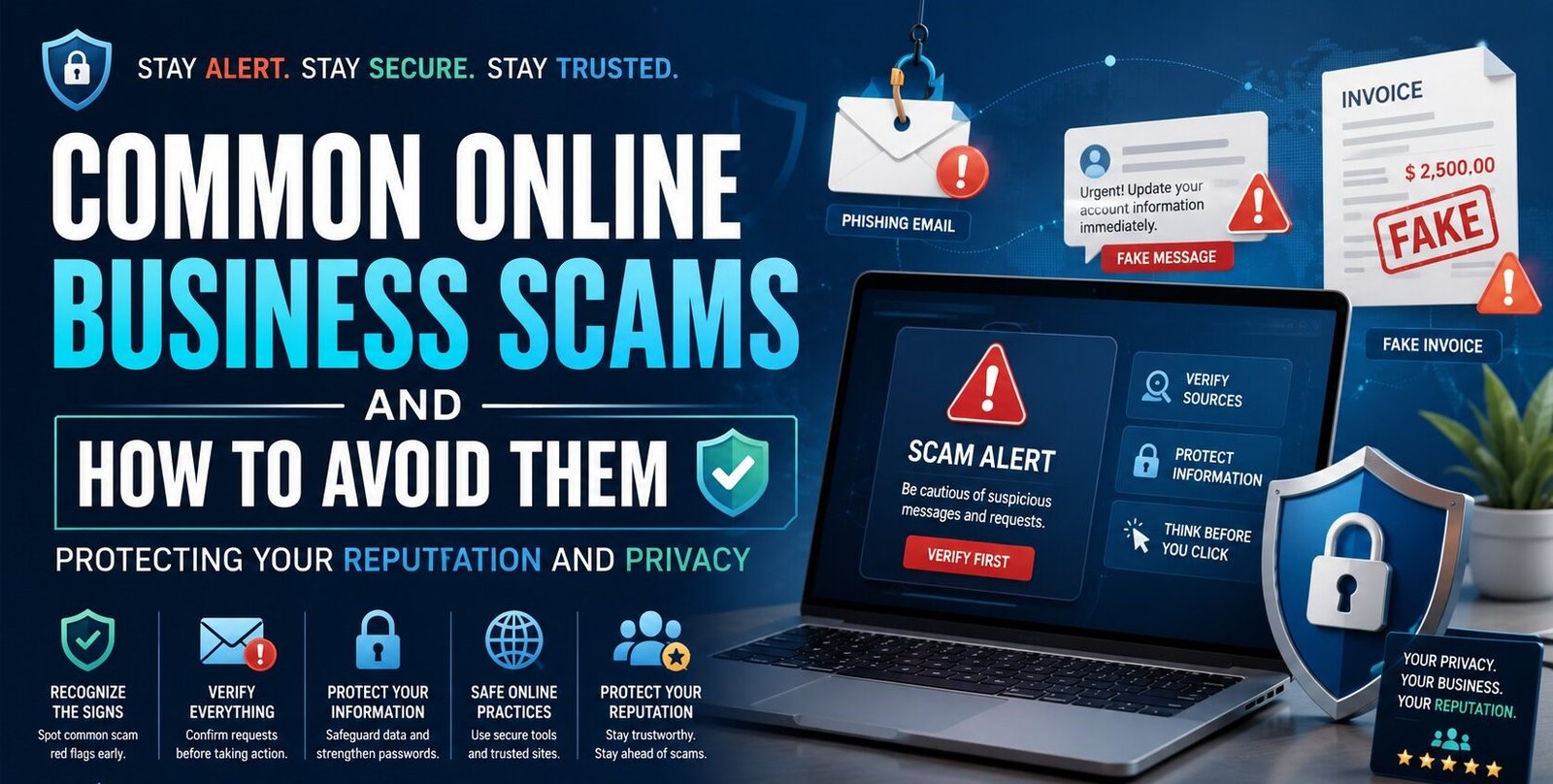
The digital landscape offers unprecedented opportunities for growth and connectivity, but it also harbours significant risks. Online Business Scams have evolved from simple phishing emails to sophisticated psychological operations. Today, online criminals target not just financial assets, but personal and professional reputations. Understanding the mechanics of Online Business Scams—from cyber harassment to online extortion—is the first step toward maintaining your online safety.
This comprehensive guide explores the most prevalent threats, warning signs, and actionable strategies to protect yourself online. By learning how Online Business Scams work, businesses can reduce financial loss, safeguard sensitive data, protect customer trust, and respond quickly before scammers damage their privacy, reputation, or long-term credibility.
The Dark Reality of Cyber Blackmail and Sextortion
One of the most devastating forms of Online Business Scams is sextortion, a crime where cyber criminals threaten to release explicit images or intimate photos unless a payment demand is met. This form of online blackmail is uniquely damaging because it weaponises shame and fear.
Unlike other Online Business Scams, sextortion can harm both personal privacy and professional reputation within minutes. Understanding how Online Business Scams like sextortion operate helps individuals and businesses respond quickly, avoid paying criminals, preserve digital evidence, and seek confidential support before the situation escalates further.
The Mechanics of the Online Friendship Trap
Many sextortion cases begin innocuously through an online friendship trap or an online dating scam, making them one of the most manipulative forms of Online Business Scams. Scammers create fake social media profiles or use fake email addresses to establish a rapport with their target. Once trust is built, they encourage the victim to share private videos or intimate images.
The moment the content is shared, the trap springs shut. The scammer reveals their true intentions, transforming from a trusted confidant into a ruthless extortionist. These Online Business Scams often include a contacts list threat, where the scammer claims they will send the private material to the victim’s family, friends, and colleagues if the blackmail fee is not paid.
Understanding how Online Business Scams like sextortion operate helps victims stay calm, avoid rushed payments, collect evidence, protect their reputation, and seek confidential support before the threats escalate further.
The Psychological Toll on Blackmail Victims
The impact on a victim of online blackmail is profound. The sheer terror of public exposure can lead to panic and poor decision-making. It is crucial to remember the golden rule of dealing with sextortionists: do not pay blackmailers. Paying the criminal threats rarely makes them go away; instead, it marks the victim as a willing source of income, leading to further demands. If you find yourself in this situation, you must immediately request help from professionals who specialize in crisis management and sextortion help.
Identifying and Stopping Online Harassment
Beyond extortion, online harassment and cyber bullying represent significant threats to individuals and businesses. These deceptive practices can destroy a family reputation or a professional reputation in a matter of days.
The Threat of Social Media Harassment
Social media harassment often involves coordinated campaigns to ruin a target’s business public profile. This can include posting Fake Reviews Online, spreading false rumors, or engaging in relentless cyber harassment cases. The goal is to inflict maximum online damage to reputation. When dealing with such online threats, it is essential to document harassment meticulously. Take screenshots of all threatening messages, including any sextortion email or sextortion text you receive, as this will be critical digital evidence later.
Safeguarding Personal and Private Information
Cyber criminals thrive on data. They exploit vulnerabilities to access personal information and private information, which they then use for personal data exposure. To mitigate these risks, you must secure your digital footprint. This means being extremely cautious about what you share online, utilizing strong, unique passwords, and enabling two-factor authentication on all accounts. The less information available to online criminals, the harder it is for them to target you.
The Role of Digital Forensics and Cyber Security Experts
When facing severe online threats, relying solely on personal knowledge is often insufficient. Engaging with cyber security experts and digital investigators is a critical step in the fight to stop online blackmail and fight back against sextortion.
How Digital Forensics Engineers Track Down Blackmailers
Digital forensics is the science of uncovering and analyzing electronic data. Digital forensics engineers use proprietary technology to identify criminals and track down blackmailers. By analyzing digital footprints, they can trace IP addresses, pinpoint geographic locations, and uncover the real identities behind cell phone numbers, email addresses, and social media accounts. This law enforcement evidence is vital for bringing perpetrators to justice and ending the cycle of abuse.
Social Engineering Experts and Crisis Management
In addition to technical tracking, social engineering experts understand the psychological tactics used by scammers. They can guide victims through crisis management, offering a confidential investigation and discreet services. These professionals provide a blackmail helpline and emergency cyber help, offering 24/7 assistance to those who need to speak to a specialist immediately. Their goal is to stop the blackmail, stop blackmailers, and ensure absolute privacy throughout the process.
Strategies for Content Takedown and Reputation Protection
If the worst happens and a scammer follows through on their threat to expose explicit content, swift action is required to minimize the damage and protect your reputation.
The Process to Remove Explicit Content
The immediate priority is to prevent exposure and keep images offline. Specialists in cyber law and cyber security can initiate a content takedown process. This involves working directly with hosting providers, social media platforms, and search engines to scrub the offending material from the internet. Speed is of the essence; the faster the content is removed, the less likely it is to be widely disseminated.
Managing Search Engine Results
Even after the initial content is removed, traces may linger in search engine results. A comprehensive reputation protection strategy involves monitoring and cleaning up Google search results, Bing search results, and Yahoo search results. This may require ongoing effort and legal intervention, often supported by a non-disclosure agreement to ensure confidential support and maintain the victim’s privacy as they rebuild their digital life.
Cross-Industry Vulnerabilities to Online Scams
Online business scams do not discriminate by industry. Whether you operate a business service or sell physical goods, the risks remain high.
Scams in Retail and Services
In sectors like home and garden, sports, and hobbies and crafts, scammers often use fake invoices or fraudulent vendor schemes to steal money. In the electronics and technology industry, the theft of intellectual property or customer data is a primary concern. Even in the food, beverages, and tobacco sector, businesses can be targeted by sophisticated phishing attacks aimed at compromising supply chains or financial systems. The common thread across all these industries is the need for robust cyber security protocols and employee education to recognize and thwart online scams.
Conclusion
The threat of online business scams, cyber blackmail, and sextortion is a grim reality of the modern digital era. However, by understanding the tactics used by cyber criminals—from the online dating scam to complex social media harassment—you can significantly reduce your vulnerability and protect your assets. The key to maintaining a secure digital presence is vigilance and rapid response. Remember to safeguard your personal information at all times, meticulously document harassment the moment it begins, and never hesitate to seek emergency cyber help from qualified digital forensics engineers and cyber security experts.
Furthermore, educating yourself and your team about the latest phishing techniques and extortion strategies is paramount. A proactive defense is always more effective than a reactive scramble. By taking these necessary, proactive steps to protect yourself online, you can defend your professional reputation, secure your absolute privacy, and navigate the complexities of the digital world with renewed confidence and peace of mind.
