
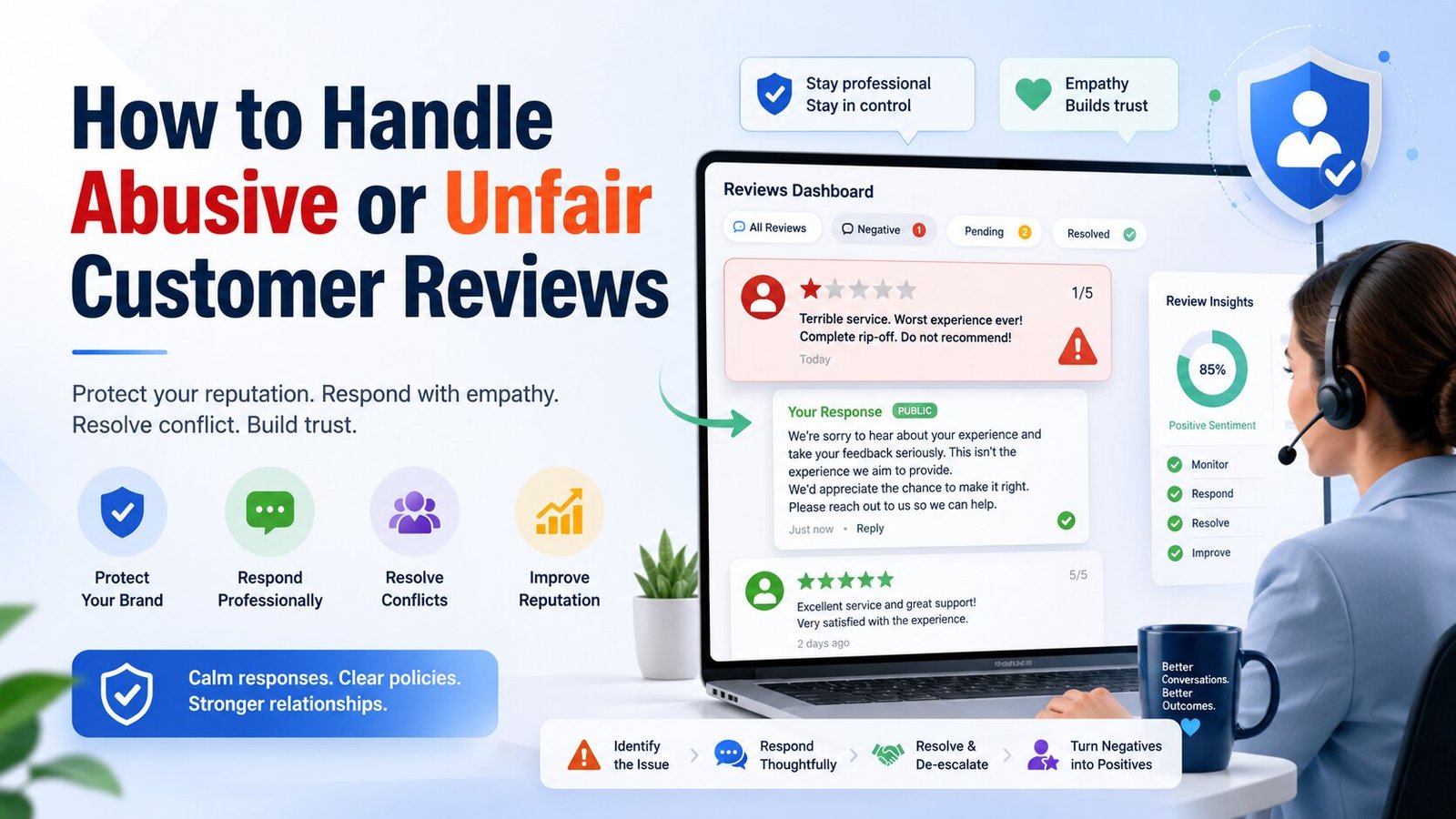
In the digital age, online reviews are the lifeblood of any successful enterprise. Whether you operate a local business service, a regional home and garden supplier, a niche sports or hobbies and crafts store, a high-end electronics and technology outlet, or a distributor of food, beverages, and tobacco, public perception directly dictates revenue. While we have previously discussed whether businesses respond to every online review, a uniquely challenging scenario arises when a business is targeted by deeply unfair customer reviews or outright abusive comments. Effectively managing this extreme form of negative customer feedback requires a highly strategic approach to feedback management, ensuring that your brand’s reputation remains intact while still fostering a deeply feedback-positive culture.
The Psychology Behind Negative Customer Feedback
Before hastily reacting to deeply harsh reviews online, it is absolutely vital for business owners and management teams to fully understand the complex, underlying psychological drivers of highly public customer complaints and Unfair Customer Reviews. It is a fundamental truth of modern commerce that absolutely not all bad reviews are created equal; meticulously distinguishing between highly irrational Unfair Customer Reviews, deeply emotional outbursts, and genuinely valuable constructive criticism is the critical first step in executing effective, strategic feedback analysis. By identifying the difference between real customer concerns and Unfair Customer Reviews, businesses can respond with clarity, professionalism, and stronger reputation management.
Differentiating Between Valid Concerns and Abuse
When actively dealing with deeply unhappy customers in a highly public forum, it is absolutely essential to carefully and objectively categorize the specific customer input being provided. A highly frustrated customer aggressively complaining about entirely legitimate, fully verifiable product quality issues, deeply annoying and highly frustrating website issues, completely unacceptable missed delivery complaints, or severe, highly systemic customer support problems is actually providing the business with highly valuable, albeit deeply painful, direct feedback.
This specific type of highly actionable negative feedback represents a massive, undeniable growth opportunity for the entire organization to drastically improve its core operations. However, when highly visible public reviews or highly viral social media feedback aggressively cross the definitive line into highly vicious personal attacks, explicit profanity, or deliberate, highly malicious corporate defamation, it immediately ceases to be highly useful user feedback and instantly becomes a severe public relations crisis requiring immediate, highly aggressive damage control and strict platform moderation .
The Impact on Customer Trust and Retention
Regardless of its validity, highly visible negative customer feedback significantly damages overall customer trust. Prospective buyers heavily rely on customer voices to gauge the overall customer experience. If abusive comments are left completely unaddressed, it creates a massive vacuum of leadership, severely impacting long-term customer retention and fracturing highly valuable customer relationships . A swift, highly professional review response is absolutely critical to proving your unwavering commitment to exceptional customer service.
The ACAF Method: A Strategic Framework
To systematically process Unfair Customer Reviews and other forms of negative feedback, industry leaders strongly advocate for the ACAF method—a structured feedback loop consisting of four distinct phases: Ask, Categorize, Act, and Follow-Up. This approach helps businesses separate emotional complaints from genuinely useful insights while managing Unfair Customer Reviews with professionalism. By applying the ACAF method consistently, brands can respond to Unfair Customer Reviews more strategically and protect long-term customer trust.
Gathering and Categorizing the Feedback
The first step is to actively ask for customer feedback across multiple channels, including support tickets, highly detailed customer surveys, and private direct messages. This ensures you capture indirect feedback before it explodes into public bad reviews. Once collected, you must meticulously categorize the data to identify specific customer patterns and recurring problems. Are the complaints primarily related to product defects, or are they rooted in communication breakdowns? Categorization allows the customer support team to accurately prioritize feedback based on its severity and overall impact on customer satisfaction .
Taking Action and Closing the Loop
The final two steps of the ACAF method are where true customer recovery occurs. You must decisively act on the insights gathered, implementing highly tangible product improvements or service improvements. Finally, you absolutely must follow-up with the specific customers who reported the issues. Closing the feedback loop by providing highly transparent customer updates proves that you are a deeply customer-centric business that actively listens to its customer needs .
Executing the Perfect Review Response
When a business is forced to publicly deal with customer complaints in a highly visible digital forum, the tactical execution of its response strategy becomes essential for preserving reputation, especially when handling Unfair Customer Reviews. A calm, professional, and evidence-based approach helps brands avoid emotional reactions while addressing Unfair Customer Reviews with clarity and control. By responding strategically to Unfair Customer Reviews, businesses can protect trust, reduce reputational damage, and demonstrate accountability to future customers.
The Importance of Speed and Professionalism
When a deeply unfair, highly aggressive review is suddenly posted online, your team absolutely must act fast. A highly visible, incredibly quick response clearly demonstrates massive corporate accountability to anyone watching the exchange unfold. However, this critical speed must absolutely never sacrifice strict corporate professionalism.
Your response team must meticulously and unwaveringly maintain a strictly professional tone and issue a highly measured, incredibly polite response, absolutely regardless of exactly how aggressively or unfairly the specific reviewer is behaving online. Issuing a highly sincere, deeply empathetic customer apology specifically for their obvious frustration—even if you firmly and factually believe the specific customer is entirely wrong about the core situation—is a highly effective, deeply proven de-escalation tactic that instantly neutralizes much of the public anger .
Empathy and Offline Resolution
To successfully and permanently execute true, lasting conflict resolution, your customer service representatives absolutely must empathize sincerely with the reviewer’s highly specific, deeply felt customer pain points. Utilizing deep, highly genuine empathy and clearly demonstrating highly active listening skills within your deeply personalized responses publicly validates their intense feelings and shows that the brand truly cares. However, after this initial public acknowledgment, you absolutely must quickly and decisively take it offline.
You must clearly provide direct, highly accessible corporate contact information and strongly encourage the highly frustrated reviewer to continue the complex conversation entirely privately . This highly strategic, deeply necessary move immediately removes the highly heated, potentially damaging argument from the unforgiving public eye and finally allows for a much more productive, highly detailed, and ultimately successful private resolution process.
Leveraging Feedback for Long-Term Business Growth
Ultimately, mastering the complex art of handling Unfair Customer Reviews is not just about immediate damage control; it is about building a stronger, more trusted business over time. When companies respond to Unfair Customer Reviews with professionalism, empathy, and clear policies, they can protect their reputation while learning from valid customer concerns. By turning Unfair Customer Reviews into opportunities for improvement, businesses can drive sustainable long-term growth across the entire enterprise.
Driving Continuous Improvement
By rigorously and systematically applying advanced feedback collection techniques and deep, highly analytical feedback analysis, businesses can successfully translate even the most painful, highly visible customer issues into a highly actionable, deeply strategic product roadmap. Publishing a highly detailed, publicly accessible public changelog that explicitly and proudly highlights exactly how direct customer input directly led to significantly better products and improved services is a massive, highly effective trust building exercise. It definitively proves to your highly valuable loyal customers that their specific voices actively and tangibly shape the entire future of the company .
Elevating the Net Promoter Score
Consistently and gracefully turning angry, highly vocal detractors into deeply satisfied, highly passionate brand promoters directly and measurably elevates your overall, highly critical Net Promoter Score (NPS Score). When prospective and current customers clearly see that your brand gracefully handles even the most difficult, highly unfair situations with absolute, unwavering professionalism and a deep, highly visible commitment to overall customer happiness, it massively and permanently reinforces deep customer loyalty across the entire market. In the very end, developing and executing a highly robust, deeply strategic approach for expertly managing negative customer feedback is absolutely the ultimate catalyst for securing massive, highly profitable long-term growth for any modern business.
