
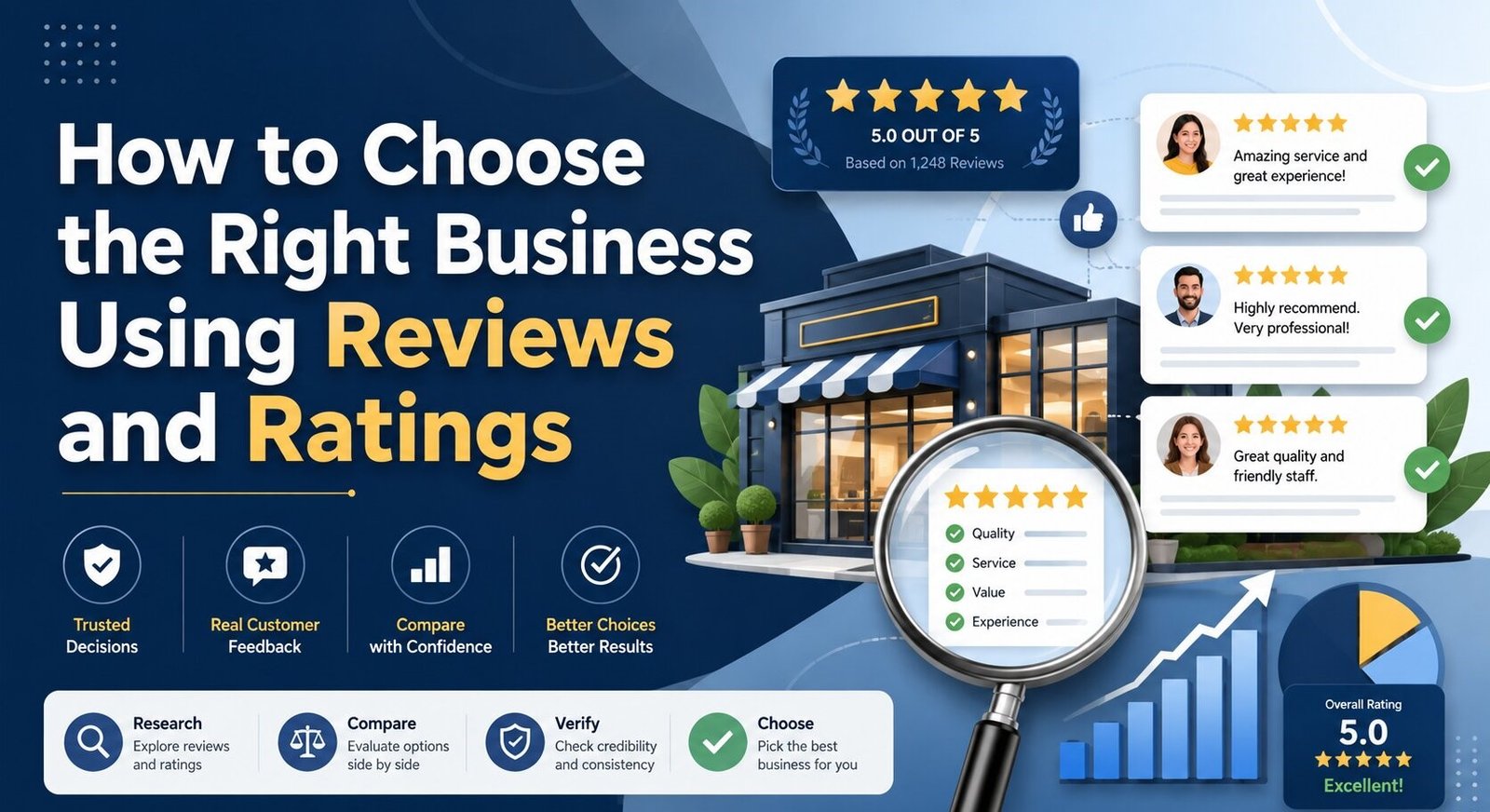
In today’s highly competitive digital marketplace, finding the right business service, a reliable home and garden contractor, or the best place to buy sports gear, hobbies and crafts, electronics and technology, or food, beverages, and tobacco can feel overwhelming. With so many options, how do you make the right choice? The answer lies in mastering the art of analyzing reviews and ratings. Just as businesses rely on business review platforms to build their online reputation, savvy consumers use these same tools to guide their customer decision-making. This comprehensive guide explores how to effectively evaluate local reviews to find the most trustworthy businesses.
Understanding the Power of Local Search Behavior
Before you can effectively and accurately analyze a review to make an informed purchasing decision, it is critically important to understand the underlying mechanics of modern local search behavior and exactly how local intent shapes the digital information you see online. Reviews and Ratings play a major role in this process because they influence trust, visibility, and how customers compare businesses before choosing one. By understanding Reviews and Ratings, you can better identify genuine customer feedback, spot patterns in service quality, and avoid relying only on star scores. In today’s search environment, Reviews and Ratings also help users make faster, smarter, and more confident buying decisions.
The Role of Local Search Visibility : Reviews and Ratings
When you perform specific location-based searches on your smartphone or computer, for example typing “best emergency plumber near me” or “top-rated local landscaper,” major search engines use complex algorithms to instantly determine local search rankings. Reviews and Ratings play an important role in this process because they help search engines understand customer trust, business quality, and local relevance. The businesses that appear at the very top of the page, especially in the highly visible map pack visibility section, do not get there by accident or pure luck. Strong Reviews and Ratings can improve how a business is perceived by both search engines and potential customers. By comparing Reviews and Ratings carefully, users can make smarter choices based on real customer experiences and service consistency.
Instead, they rely heavily on a comprehensive, well-executed local SEO strategy that actively leverages and optimizes for various review signals. Reviews and Ratings are a key part of these signals because they help search engines evaluate customer trust, service quality, and business credibility. Search engines continuously evaluate three primary local ranking factors to determine these placements: prominence, which shows how well-known the business is; relevance, which shows how well the business matches the specific search query; and distance, which shows how close the business is to the searcher’s physical location. Therefore, a business that has achieved high local search visibility usually possesses a robust, well-maintained digital footprint. Strong Reviews and Ratings clearly indicate that the business has invested time and resources into building and protecting its local reputation. For customers, comparing Reviews and Ratings can also make it easier to identify trustworthy businesses with consistent service quality.
Navigating Local Business Listings
To evaluate a business properly, you must look beyond just one platform. Reviews and Ratings across multiple platforms can help you understand whether customer feedback is consistent or only strong in one place. Consistent local business listings across various local directories are also a strong indicator of a legitimate operation. This is known as citation consistency or NAP consistency, which stands for business name, address, and phone number. If a business has accurate and matching information across Google, Yelp, and industry-specific directories, it demonstrates professionalism and reliability. Strong Reviews and Ratings combined with accurate business information show that the company is serious about trust and customer experience. Inconsistent data, weak Reviews and Ratings, or mismatched contact details should serve as an immediate red flag.
Analyzing Review Metrics: Beyond the Star Rating
While the overall star rating is the most visible metric, it is only a small part of the story. Reviews and Ratings should be analyzed beyond the surface level because a five-star average does not always reveal the full customer experience. To truly gauge customer satisfaction, you must dig deeper into the data, including review quality, review frequency, customer complaints, owner responses, and recurring service patterns. Strong Reviews and Ratings often show consistency across multiple customers, not just a high score. By carefully comparing Reviews and Ratings, you can make a more informed decision and choose a business with greater confidence.
The Importance of Quantity, Quality, and Velocity
A business with a perfect 5.0 average rating based on only two reviews is far less reliable than a business with a 4.6 rating based on 500 reviews. Review quantity provides a statistically significant sample size, establishing true social proof and consumer trust.
Furthermore, you must evaluate review velocity and review frequency. A business that received 100 reviews three years ago but none recently may have changed ownership or let their standards slip. Fresh reviews are critical; in fact, many consumers only trust reviews written within the last three months . Finally, consider review diversity—does the business have reviews across multiple third-party review sites and review platforms, or are they all suspiciously concentrated in one place?
Decoding Review Sentiment and Snippets
Do not just look at the stars; read the actual customer feedback. Search engines often highlight review snippets—short, keyword-rich excerpts from user-generated content that summarize the overall review sentiment. Look for specific details regarding the customer experience. Are people praising the promptness of the service, the quality of the products, or the friendliness of the staff? Detailed positive reviews that mention specific employees or services carry much more weight than generic, one-sentence praises.
Evaluating Business Engagement and Reputation Management
How a business handles its online reviews is a direct reflection of its customer service philosophy and overall brand reputation.
The Significance of Owner Responses
One of the most telling trust signals is how a business engages with its clientele. Review responses—specifically, professional owner responses—demonstrate that the business values customer feedback. Responding to reviews is a critical component of active review management and reputation management. When evaluating a business, pay close attention to how they handle criticism. Do they offer apologies and solutions to negative reviews, or do they become defensive and argumentative? A business that actively works to resolve issues publicly demonstrates high local business credibility.
Ethical Review Generation
It is also important to understand how businesses acquire their reviews. Ethical review generation and review acquisition involve asking for reviews from satisfied customers without offering financial incentives, which violates most platform review guidelines. A natural mix of detailed feedback suggests ethical practices, whereas a sudden, unexplained spike in generic five-star reviews may indicate manipulation.
Spotting Red Flags: Fake Reviews and Spam
Unfortunately, not all customer reviews are genuine. Learning to spot fake reviews and review spam is an essential skill for any consumer.
Bypassing Review Filters
Major platforms employ sophisticated review filters to catch fraudulent activity, but some still slip through. When evaluating review authenticity, look for suspicious patterns. Are there dozens of reviews posted on the exact same day using similar phrasing? Do the reviewers have empty profiles with no history of reviewing other businesses? These are classic signs of manipulated review signals.
Trusting Your Instincts for Conversions
Ultimately, the goal of reading local SEO reviews is to guide your conversion rate—whether that means making direction requests, initiating phone calls, or completing a purchase. If the Google Business Profile reviews or Google reviews seem too good to be true, cross-reference them with other platforms. If the overall narrative across the web feels inconsistent or overly manufactured, trust your instincts and look for a different provider.
Conclusion
In the modern digital economy, successfully choosing the absolute right business for your specific needs requires significantly more effort and critical thinking than just briefly glancing at an overall star rating on a single platform. By taking the time to truly understand exactly how local pack rankings work behind the scenes, and by deeply and methodically analyzing crucial metrics such as review quality, overall review quantity, and the consistency of review velocity, savvy consumers can consistently make highly informed, confident purchasing decisions.
It is imperative to pay very close attention to the nuanced review sentiment hidden within the text, the tone and professionalism of all public owner responses, and the overall accuracy and consistency of their various local business listings across the entire web. By diligently mastering these comprehensive evaluation techniques, you can successfully cut through the distracting noise of manipulative fake reviews, effectively leverage the true power of authentic social proof, and confidently choose the absolute best local businesses to meet and exceed your expectations every single time.
